Liquid Robotics, NOAA Sign Co-operation Agreement
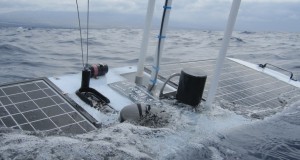
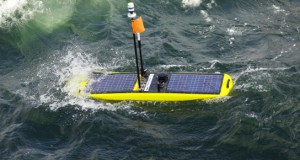
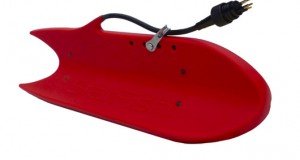
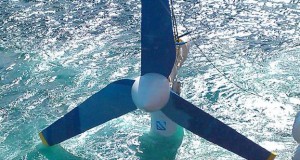
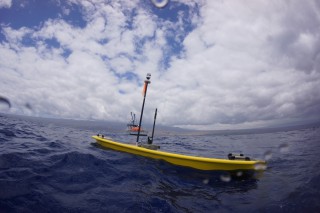 Liquid Robotics' Wave Glider
Liquid Robotics and the National Oceanic and Atmospheric Administration (NOAA) announced the signing of a multi-year, Cooperative Research & Development Agreement (CRADA) designed to advance ocean observations to improve U.S. weather forecasting, fisheries management and environmental monitoring.
The NOAA/Liquid Robotics CRADA combines the significant product capabilities of the Wave Glider, a revolutionary, wave powered unmanned ocean robot, with NOAA’s engineering, data analysis and modeling expertise for applications that will have long-term benefits to the general public.
“Over several years, we’ve worked closely with Liquid Robotics on multiple applications with their innovative technology, the Wave Glider. We’ve used the Wave Glider to demonstrate advances in hurricane forecasting, measure CO2 levels, monitor the Arctic marine environment, detect tsunamis and collect fisheries data,” said Craig McLean, NOAA’s deputy assistant administrator of the Office of Oceanic and Atmospheric Research. “I am pleased to establish this agreement to strengthen our important partnership and to improve environmental observations.”
The NOAA/Liquid Robotics CRADA will focus research on three primary areas:
- Expand and enhance integrated sensor capabilities that will augment information needs, fill data gaps and lower data acquisition costs;
- Improve unmanned platform operational capabilities or geographic scope of coverage to collect data in areas or in conditions too difficult or risky for manned observations;
- Utilize sensor data collected from unmanned platforms to augment or replace existing data collection technologies (i.e. moored buoys, satellites, research vessels).
More specifically, the CRADA will involve collaboration for:
- Improvement of hurricane intensity forecasting models;
- Arctic meteorological and oceanic exploration;
- Coastal mapping/hydrographic surveys;
- Carbon dioxide monitoring and ocean acidification data gathering;
- Fisheries surveys;
- Marine animal population assessments;
- High precision water quality measurements in the Great Lakes;
- Augmentation or replacement of coastal weather buoys;
- Improvement of domain awareness of marine sanctuaries.
Additionally, there will be research expeditions to augment weather satellite data collection records by providing high resolution, surface (in-situ) data over long duration time periods (up to a year) and vast ocean expanses never before affordable or feasible to collect.
“We are excited to be working closely together with NOAA to advance ocean observations with long duration autonomous systems,” said Bill Vass, CEO of Liquid Robotics. ”We believe our Wave Glider technology provides a cost efficient way to gather scientific and environmental data to address the many challenges ahead.”
Press Release, April 25, 2014; Image: Liquid Robotics