NOAA Expands Boundaries of Thunder Bay National Marine Sanctuary
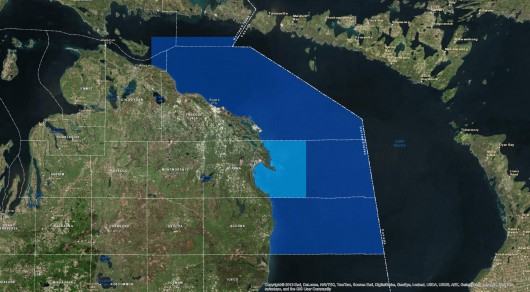
NOAA released a final rule and environmental impact statement expanding the boundaries of Thunder Bay National Marine Sanctuary in Lake Huron from 448 square miles to 4,300 square miles. The new boundaries now include the waters of Lake Huron adjacent to Michigan’s Alcona, Alpena and Presque Isle counties to the Canadian border.
The expansion is based on several years of research by NOAA and its many scientific partners, and now protects an additional 100 known and suspected historic shipwreck sites.
The expansion of the sanctuary was driven by strong public support. During the process to review the sanctuary’s management plan in 2006, several local government and non-governmental organizations passed resolutions or submitted written letters of support for boundary expansion. Additionally, in 2007, the Thunder Bay Sanctuary Advisory Council adopted a resolution supporting expanded boundaries. NOAA held three public scoping meetings on this topic in April 2012 to hear from the community.
“The expansion of Thunder Bay National Marine Sanctuary represents an important milestone for the sanctuary and the region,” said Jeff Gray, sanctuary superintendent. “We welcome the opportunity to expand our research and education programs to provide increased protection for the Great Lakes and their rich history. We are also excited to work with our community partners to further enhance sustainable tourism in the region.”
Designated in 2000, Thunder Bay National Marine Sanctuary, headquartered in Alpena, Michigan, is one of 14 sites managed by NOAA’s Office of National Marine Sanctuaries, and the only one in the Great Lakes. Co-managed by NOAA and the state of Michigan, Thunder Bay National Marine Sanctuary has become an important part of the regional economy. Through increased tourism and related business development, the sanctuary is working with various partners to encourage sustainable tourism and foster greater awareness of the Great Lakes and their rich maritime heritage.
Thunder Bay features some of the world’s best-preserved shipwrecks, and visitors can explore these underwater sites first-hand through diving, snorkeling and kayaking. Drawing more than 80,000 visitors annually, the sanctuary’s Great Lakes Maritime Heritage Center, also in Alpena, features more than 10,000 square feet of interactive exhibits and has become a major tourism destination in the region.
NOAA, September 08, 2014; Image: NOAA