Petrobras Uses Subsea Vessel for Sapinhoá Well Setup
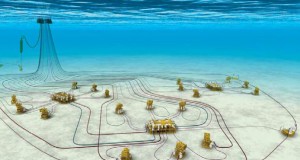
Petrobras deployed its first wet Christmas tree (equipment installed on a wellhead, composed of a set of remotely operated valves designed to control the flow of fluids such as oil, water and natural gas from a reservoir to the surface) using cables in the pre-salt area at the end of last year.
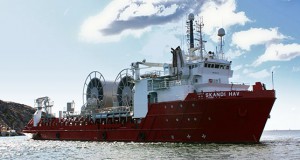
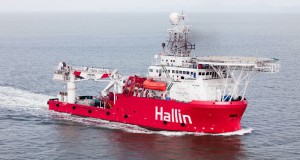
The main change involved was the use of a subsea equipment support vessel (SESV) to install the equipment rather than a traditional drilling ship. This resulted in a time saving of approximately 10 days, generating a gain of more than US$5 million. The well on which the Christmas tree was installed using this technique, called 7-SPH-2D-SP, is located in Sapinhoá field, in the pre-salt layer of Santos Basin, at a depth of 2,130 meters.
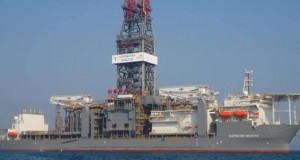
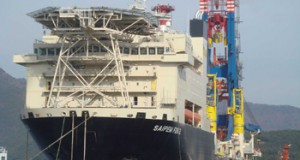
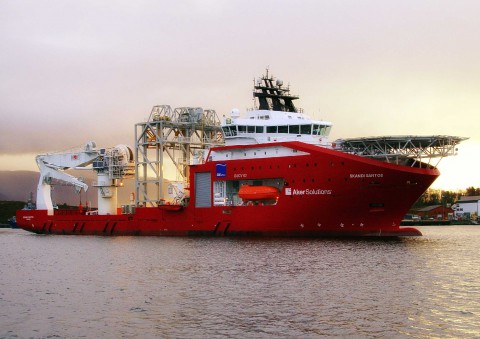
The operation, which involved lowering the Christmas tree into position and installing it on the wellhead using a suspended cable, was carried out from an SESV using a subsea equipment guidance system. This installation technique replaces the use of drilling ships, which are much more expensive to charter. SESVs have some other major advantages in relation to traditional drilling ships. For example, using a drilling ship it takes around 10 hours to lower a “riser” (a kind of pipe) 1,000 meters in the open sea. Consequently, the time taken to lower a Christmas tree for installation on a well at a water depth of 2,300 meters is 40 hours on average. SESVs, on the other hand, can perform the same maneuver in less than four hours, due to the cable launch and return speed.

Petrobras had already used this technology at depths of up to 2,000 meters. Following engineering studies, some adaptations were made to the SESV Skandi Santos, enabling the vessel to install equipment at depths of up to 2,300 meters. After the success of this first experience, the use of SESVs has now been proven as a viable option for the pre-salt layer, and this will help reduce operating costs and times. Petrobras has now chartered a second SESV, which is being adapted for depths of up to 2,500 meters and which should start operating in the second half of 2016.
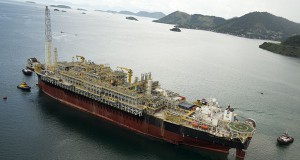
Sapinhoá field is operated by Petrobras (45%), in partnership with BG E&P Brasil Ltda (30%) and Repsol Sinopec Brasil S.A. (25%).