NOAA: Okeanos Explorer to Start Caribbean Sea Expedition
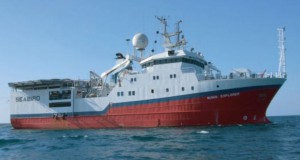
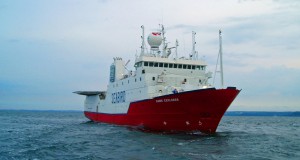
Beginning April 10, scientists aboard NOAA Ship Okeanos Explorer will begin a series of 20 dives to investigate previously unseen depths of the Caribbean Sea and Atlantic Ocean.
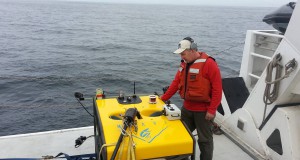
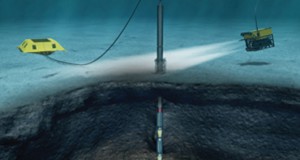
During dives that are expected to go as deep as 3.7 miles, an ROV, will broadcast live video from the seafloor, allowing anyone with Internet access to watch the expedition as it unfolds, NOAA informed.
“We’ll be exploring an area of the United States Exclusive Economic Zone that science knows very little about,” said Alan Leonardi, Ph.D, director of NOAA’s Office of Ocean Exploration and Research, the federal program responsible for coordinating this expedition. “In order to understand and sustainably manage the ocean’s resources, we first have to survey what resources exist.”
Many of the expedition’s anticipated 20 ROV dives will take place in the Puerto Rico Trench, which is nearly 500 miles long and nearly 5.4 miles at its deepest – deeper than anywhere else in the Atlantic Ocean basin. Other areas to be explored include the Muertos Trough, Mona Channel and Virgin Islands Trough.
“We don’t know exactly what we can expect to see,” said Lt. Brian Kennedy, the expedition’s coordinator and a member of NOAA’s Commissioned Officers Corps. “That’s precisely why we explore.”
But, he added, scientists do know a few things about the area: They know that it is tectonically active, with some seismic hazards such as earthquakes and tsunamis. They are also fairly certain the area contains deepwater snapper populations, deepwater corals and geological features such as seamounts and mud volcanoes.
Because of these characteristics, the area was identified by members of the ocean science community as important to explore, and data from the expedition will likely have long-lasting implications for scientists and resource managers in the Caribbean. As many as 40 scientists ashore are expected to participate remotely in the expedition.
“Previous Okeanos Explorer expeditions have come across unknown species, recorded known animals exhibiting never-before-seen behaviors and sighted live animals previously only observed as lifeless specimens,” Kennedy said.
Okeanos Explorer, which is operated, managed and maintained by NOAA’s Office of Marine and Aviation Operations, has just spent about four weeks mapping more than 13,600 square miles of seafloor around the U.S. Virgin Islands and Puerto Rico. The maps show the seafloor in detail, making them useful for biologists, geologists, oceanographers and geophysicists. The expedition team also relied on these maps to determine where the ROV dives will take place.
The next Okeanos Explorer expedition will take place from July to September in the Pacific Ocean – in and around Papahānaumokuākea Marine National Monument and Hawaiian Islands Humpback Whale National Marine Sanctuary.
Source: NOAA