Carnegie Prepares for First CETO 5 Unit Maintenance

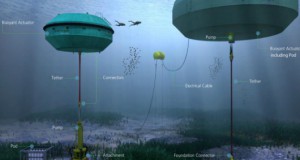
Wave energy developer Carnegie Wave Energy Limited announces that the three CETO 5 units have now accumulated more than 7,500 continuous operating hours.

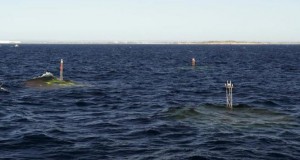
The first CETO 5 unit has now been operating for over 4,000 hours, with the second CETO 5 unit achieving over 2,000 operational hours. The third CETO 5 unit was installed at the project site in early March and has now been operating alongside the two other CETO 5 units for over 1,000 hours. During the 7,500 continuous operational hours the units have experienced a range of sea states, including waves up to 4m in height, the company reported.

Additionally, following connection to the grid in February, an initial period of grid commissioning, data collection and analysis has been completed and provided to the grid owner, Western Power, and the Perth Project has now been deemed to comply with Western Power Technical Rules. This allows consistent power generation and export to the grid to proceed.

Maintenance

The operation and maintenance activities during the project are conducted by Carnegie’s Operations and Maintenance team and to date have included regular offshore inspections – through diving and remotely operated vehicles (ROVs) – as well as onshore activities such as the maintenance of plant and equipment and monitoring of working fluid cleanliness.

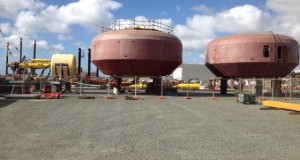
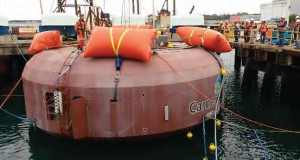
Carnegie had previously planned to retrieve one of the first two CETO 5 units at the same time as the deployment of the third unit however, this was deferred to allow all three units to operate as an array for a period of approximately 30 days. This period has now been reached, and preparations have now started to retrieve CETO Unit 1 and Pod 1 for a complete strip down, inspection and overhaul.

Planned retrieval and inspection activities also allow for more informed operation and maintenance activities ahead of winter and include the removal of biofouling, inspection of seals in the CETO pump, inspection of bearings in the load path components and repair of some failed instrumentation. Importantly, the retrieval of CETO Unit 1 provides an opportunity to verify the retrieval method which is a key input into the ongoing operating philosophy associated with the Perth Project and CETO 6, the company said.

Performance

In order to effectively assess the performance of the CETO 5 unit, Carnegie has equipped the CETO units and the balance of plant with approximately 500 sensors generating 4 GB of data per day. This allows performance data such as pressure, flow, displacement, power, load, position and the like to be recorded and transmitted. This data is also used by the Process Control System and the Plant Operators to control the units and system response to optimise the overall performance of the plant. This optimisation process is now underway for the Perth Project, Carnegie informed.

The analysis of the data is being done in-house by Carnegie’s technical team, who were also responsible for the design, procurement, integration testing and commissioning of the Perth Project. It is estimated that the performance analysis process will be completed later this year and an independent review will then be undertaken to ensure the integrity of the analysis work.

Share this article

Follow Subsea World News

Events>

<< Feb 2016 >>
MTWTFSS
1 2 3 4 5 6 7
8 9 10 11 12 13 14
15 16 17 18 19 20 21
22 23 24 25 26 27 28
29 1 2 3 4 5 6

FPSO Europe Congress


Pursuing Cost-Optimization & Project Excellence across Europe’s FPSO Value Chain!

Launched to great success in 2015, the FPSO Europe Congress is set to return on 24-25 February 2016 in London for yet another exciting gathering of Europe’s leading oil operators, FPSO contractors, EPCs, shipyards and solution providers to discuss the most topical and critical FPSO developments in the North Sea, Latin America, Brazil and West Africa market.


Why Attend the 2nd Annual FPSO Europe Congress?

  • Discover how FPSO leaders are embracing the new realities of a low oil price environment – what are the strategies to adopt in pursuit of viable economical FPSO projects?
  • Brainstorm with industry experts on innovative FPSO engineering, construction and technology breakthroughs leading to significant CAPEX and OPEX savings
  • Review, refine and optimize your existing FPSO operations - how can we enhance oil recovery and extend FPSO asset lifetime?
  • Learn from FPSO experts on the ins-and-outs of delivering successful FSPO projects in North Sea, West Africa, Latin America and Brazil – how can we comply with local content and form effective native partnerships?
  • Engage and form sustainable partnerships with European-based oil companies and FPSO contractors that are leading offshore E&P and FPSO projects in the region


2016 FPSO Distinguished Speakers Include:

  • Curtis Lohr, Stones Project Manager, Shell
  • David Hartell, Senior Development Manager, Premier Oil
  • Terry Hughes, Project Director, Tullow Oil
  • Sid Sircar, Facilities Delivery Manager – Catcher Development, Premier Oil
  • Michael Wyllie, Group Technology Director, SBM Offshore
  • Chris Brett, President, Teekay Offshore
  • Puneet Sharma, Vice President, MODEC
  • Eirik Barclay, CEO, Yinson Production


The FPSO Europe Congress 2016 is proud to bring you an updated program offering fresh perspectives, creative solutions and critical market intelligence fundamental to FPSO business sustainability as we discuss just HOW and WHAT you can do in pursuit of a viable, efficient and safe FPSO strategy.

For more information please visit the website at http://goo.gl/uvYsrk or email [email protected]


read more >

Topsides Platforms & Hulls

Topsides, Platforms & Hulls Conference & Exhibition is the offshore industry’s only event dedicated to the topsides, platforms and hulls…

read more >

The 16th North Sea Decommissioning Conference

The 2016-programme has been composed to shed light on the effect of the current low oil-price environment on the decommissioning market…

read more >

Substructures for UK Offshore Wind

Design, construction and installation

Optimising offshore substructures is one of the key challenges for reducing LCOE. Foundation designers have produced a variety of different solutions: monopiles, GBS, jackets, suction buckets and floating foundations. Looking at U.K. projects – different soils, water depths,fabrication timelines and installation challengescreate many questions for the industry to solve. We’re entering uncharted territory; projects arelarger, farther and more complex than ever completed.

Now is the time to have a close look at lessons learnt and define the room for improvement for the U.K. wind industry.

More Info

read more >