NPD Looks into Exploration of Seabed Minerals
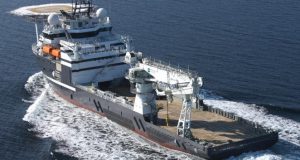
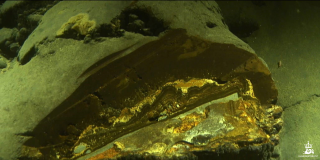 Photo: The Norwegian Petroleum Directorate
The Norwegian Ministry of Petroleum and Energy has taken over management responsibility for exploration and recovery of mineral deposits on the continental shelf.
This was adopted in a cabinet meeting resolution on March 31, and the relevant authorities had been notified in advance.
As the specialist directorate under the Ministry of Petroleum and Energy, the Norwegian Petroleum Directorate will also receive new tasks as a result of the transfer of management responsibility.
Up to now, the Ministry of Trade, Industry and Fisheries has had this responsibility. The reason for the transfer is that the Ministry of Petroleum and Energy has extensive experience with regulation and management on the continental shelf.
Until now, Norwegian sea areas have not been widely explored with regard to mineral deposits, and current regulations are not designed for such activity. The authorities are therefore working on drafting a new, modern act on mineral recovery on the continental shelf. This was submitted for public consultation on Wednesday, May 10.
“The NPD is an agency with considerable knowledge about the geology on the shelf, so this is a perfect task for us. We are looking forward to tackling this job,” says exploration director Sissel Eriksen.
The NPD has mapped the petroleum potential on the Norwegian shelf for many years, and this work has provided considerable knowledge about other resources:
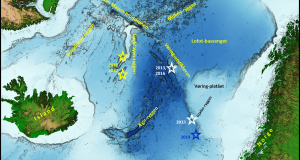
“Through the work on mapping the shelf’s outer borders, and particularly the surveys of the sea areas surrounding Jan Mayen, we have examined and taken samples of minerals on the seabed. We have done this while collecting samples to assess the potential for discovering oil and gas,” says Eriksen.
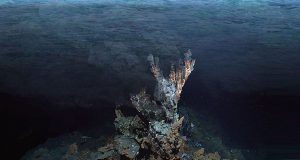
The seabed minerals that are commercially interesting are located at water depths, from 1500 to 3000 metres, and in areas where there is no oil or gas.
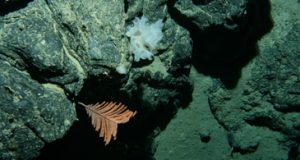
Minerals on the seabed can be split into two groups; sulphide minerals along spread ridges and iron manganese crusts on bare rock on the seabed. The NPD has collected some iron manganese crusts, and chemical analyses show promising results with regard to “green minerals”, which are metals that are important within modern communication technology and wind power.
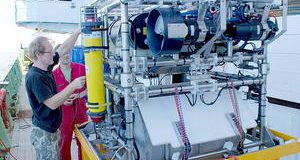
“While the NPD has completed some mapping and gathered some samples, we have barely scratched the surface. We have considerable work to do, which will involve using geophysical readings and taking samples of the seabed with remotely operated vehicles (ROVs),” the exploration director says.
The NPD has already established a good relationship with the University of Bergen for use of this technology.
“Otherwise this is completely new to us – we now need to obtain an overview of what the new task means and how it can be adapted to the NPD’s organisation,” Eriksen concludes.