Beenish Ayaz Begins Research Project ‘Dynamically Reconfigurable Underwater Wireless Sensor Networking’ at NSRI (UK)
NSRI welcomes a wew PhD Student, Beenish Ayaz, who is about to begin her research project “Dynamically Reconfigurable Underwater Wireless Sensor Networking”
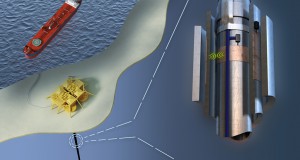
Dynamically Reconfigurable Underwater Wireless Sensor Networking
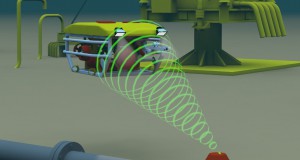
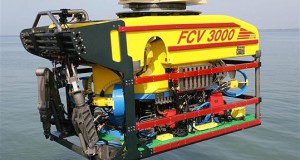
Land-based wireless sensor networking (WSN) is a highly active field of research. Concurrently, there have been recent significant advances in subsea communications capabilities. In the subsea industry, there is a need to deploy a range of sensors and actuators, both fixed and mobile. To optimise the sensor systems, permit remote control, and maximise the value of the information returned, it would be advantageous to wirelessly network the sensors. The translation of WSN concepts to the underwater environment has only recently begun to be explored.
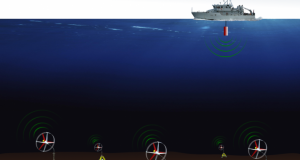
This project will investigate the implementation of WSN in the subsea domain. Sensor nodes autonomously communicate with each other using acoustics. As with “conventional” WSN, communication is costly in terms of energy dissipation, and communication / computation tradeoffs and protocols will be investigated and optimised. With hydro-acoustic waves, communication speeds are 5 orders of magnitude slower than with electromagnetic radiation. This has significant effects on communication protocols and networking of groups of sensors. What is of particular interest is the situation where the sensors move, and indeed the composition of the network of sensors changes. This could be the case where there are a number of static sensors augmented by mobile sensors: sensors may join and leave sensor groups depending on various factors. Networking protocols will therefore be developed which take account of hydro-acoustic communication speeds and the requirements of dynamic reconfigurability. There have also been recent developments in understanding the long range communication behaviour of sound waves in the oceanic environment: this project will develop this work and embed the results, in order to further enhance underwater communications for sensor systems.
The work will build on our current research in signal processing, sensor networking, and the dynamics of oceanic signal propagation. Future subsea sensor deployments will include freely moving vehicles and mobile networks which reconfigure automatically. They could have the ability, for example, to respond to critical events underwater. The work in this proposal will provide the underpinning techniques which will open the way to longer term research into a range of scenarios and applications.
Source: nsri,May 05, 2011;