UK: Scientists Prove Power Capture and Cost Benefit Potential of Pelamis ‘Line-Absorber’ Principle
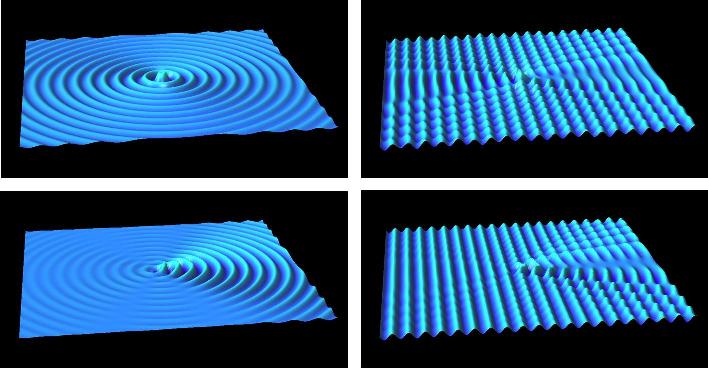
Hydrodynamicists at Pelamis Wave Power have published a scientific paper that could have profound implications for the race to commercial production of wave energy converter machines, after proving the theoretical advantage of line absorbers over point absorbers.
The paper entitled “Maximum wave-power absorption by attenuating line absorbers under volume constraints” is due to appear shortly in Applied Ocean Research. It extends existing wave power theory to long, narrow absorbers of different sizes, and answers important questions on the ultimate limits of wave power absorption with practical engineering constraints that could have real implications for developers of wave power machines.
The key theoretical results of the paper are:
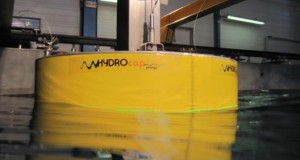
- ‘Heaving point absorbers’ such as heaving buoys have a limit on their power capture, beyond which any increase in volume gives no additional absorbed power.
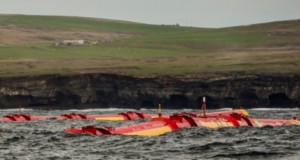
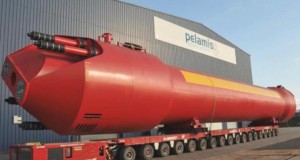
- In contrast, line absorbers such as the Pelamis wave energy converter have no limit on their power capture and therefore can be scaled up indefinitely.
- A line absorber with a volume equal to that maximum usable volume of a point absorber can absorb nearly 80% more power than that point absorber.
- Doubling this line absorber’s volume gives over three times the maximum absorbed power of the point absorber. Tripling the line absorber’s volume gives over four times the absorbed power of the point absorber.
- These theoretical advantages of line absorbers over point absorbers are relevant to wave power machines currently in operation and inform future scaling up of these machines.
The results suggest that the line absorber configuration used by Pelamis Wave Power could have significant commercial advantages when scaling up wave energy converter machines and reducing the cost of energy generated from wave power. In addition to the substantially greater power available per tonne of materials used to construct the machine, installing fewer, larger line absorbers offers valuable savings on grid connection, anchoring systems, and maintenance that are not available from point absorbers.
David Pizer, Principal Scientist at Pelamis Wave Power, said:
“The wave power industry is poised to enter a commercial phase of development by scaling up energy production and reducing costs. This paper confirms that the long, snaking approach of Pelamis offers the greatest potential to generate low-cost, renewable energy from ocean waves on a large scale.”
Subsea World News Staff , April 25, 2012; Image: Pelamis Wave