Study: Wave Energy Integration Cheaper than Alternatives
Study Wave Energy Integration Cheaper than Alternatives

A new analysis suggests that large-scale wave energy systems developed in the Pacific Northwest should be comparatively steady, dependable and able to be integrated into the overall energy grid at lower costs than some other forms of alternative energy, including wind power.

The findings, published in the journal Renewable Energy, confirm what scientists have expected – that wave energy will have fewer problems with variability than some energy sources and that by balancing wave energy production over a larger geographic area, the variability can be even further reduced.

The variability of alternative energy sources is one factor that holds back their wider use – if wind or solar energy decreases and varies widely, then some other energy production has to back it up, and that adds to the overall cost of energy supply.

“Whenever any new form of energy is added, a challenge is to integrate it into the system along with the other sources,” said Ted Brekken, an associate professor and renewable energy expert in the College of Engineering at Oregon State University.

“By producing wave energy from a range of different sites, possibly with different types of technology, and taking advantage of the comparative consistency of the wave resource itself, it appears that wave energy integration should be easier than that of wind energy,” he said. “The reserve, or backup generation, necessary for wave energy integration should be minimal.”

This estimate of the cost of integrating wind energy indicated that it would be 10 percent or less than the actual charges being made for the integration of wind energy. Energy integration, however, is just one component of the overall cost of the power generated. Wave energy, still in the infancy of its development, is not yet cost competitive on an overall basis.

Wave energy is not now being commercially produced in the Pacific Northwest, but experts say its future potential is significant, and costs should come down as technologies improve and more systems are developed. This study examined the hypothetical addition of 500 megawatts of generating capacity in this region by 2025, which would be comparable to approximately five large wind farms.

Another strength of wave energy, the study suggested, is that its short-term generation capacity can be predicted with a high degree of accuracy over a time scale ranging from minutes to hours, and with some accuracy even seasonally or annually

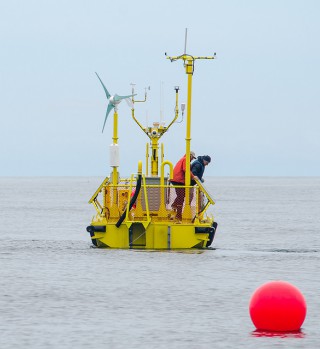
Press Release; Image: Pat Kight, Oregon Sea Grant

Share this article

Follow Subsea World News

Events>

<< Feb 2016 >>
MTWTFSS
1 2 3 4 5 6 7
8 9 10 11 12 13 14
15 16 17 18 19 20 21
22 23 24 25 26 27 28
29 1 2 3 4 5 6

FPSO Europe Congress


Pursuing Cost-Optimization & Project Excellence across Europe’s FPSO Value Chain!

Launched to great success in 2015, the FPSO Europe Congress is set to return on 24-25 February 2016 in London for yet another exciting gathering of Europe’s leading oil operators, FPSO contractors, EPCs, shipyards and solution providers to discuss the most topical and critical FPSO developments in the North Sea, Latin America, Brazil and West Africa market.


Why Attend the 2nd Annual FPSO Europe Congress?

  • Discover how FPSO leaders are embracing the new realities of a low oil price environment – what are the strategies to adopt in pursuit of viable economical FPSO projects?
  • Brainstorm with industry experts on innovative FPSO engineering, construction and technology breakthroughs leading to significant CAPEX and OPEX savings
  • Review, refine and optimize your existing FPSO operations - how can we enhance oil recovery and extend FPSO asset lifetime?
  • Learn from FPSO experts on the ins-and-outs of delivering successful FSPO projects in North Sea, West Africa, Latin America and Brazil – how can we comply with local content and form effective native partnerships?
  • Engage and form sustainable partnerships with European-based oil companies and FPSO contractors that are leading offshore E&P and FPSO projects in the region


2016 FPSO Distinguished Speakers Include:

  • Curtis Lohr, Stones Project Manager, Shell
  • David Hartell, Senior Development Manager, Premier Oil
  • Terry Hughes, Project Director, Tullow Oil
  • Sid Sircar, Facilities Delivery Manager – Catcher Development, Premier Oil
  • Michael Wyllie, Group Technology Director, SBM Offshore
  • Chris Brett, President, Teekay Offshore
  • Puneet Sharma, Vice President, MODEC
  • Eirik Barclay, CEO, Yinson Production


The FPSO Europe Congress 2016 is proud to bring you an updated program offering fresh perspectives, creative solutions and critical market intelligence fundamental to FPSO business sustainability as we discuss just HOW and WHAT you can do in pursuit of a viable, efficient and safe FPSO strategy.

For more information please visit the website at http://goo.gl/uvYsrk or email [email protected]


read more >

Topsides Platforms & Hulls

Topsides, Platforms & Hulls Conference & Exhibition is the offshore industry’s only event dedicated to the topsides, platforms and hulls…

read more >

The 16th North Sea Decommissioning Conference

The 2016-programme has been composed to shed light on the effect of the current low oil-price environment on the decommissioning market…

read more >

Substructures for UK Offshore Wind

Design, construction and installation

Optimising offshore substructures is one of the key challenges for reducing LCOE. Foundation designers have produced a variety of different solutions: monopiles, GBS, jackets, suction buckets and floating foundations. Looking at U.K. projects – different soils, water depths,fabrication timelines and installation challengescreate many questions for the industry to solve. We’re entering uncharted territory; projects arelarger, farther and more complex than ever completed.

Now is the time to have a close look at lessons learnt and define the room for improvement for the U.K. wind industry.

More Info

read more >