Scientist Find Diverse Ecosystem in Deep-Sea Mining Area
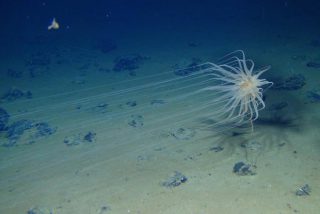 Photo: Diva Amon and Craig Smith
Scientists have discovered impressive abundance and diversity among the creatures living on the seafloor in the Clarion-Clipperton Zone (CCZ)—an area in the equatorial Pacific Ocean being targeted for deep-sea mining.
The study, published in Scientific Reports, lead authored by Diva Amon, a post-doctoral researcher at the University of Hawai‘i at Mānoa School of Ocean and Earth Science and Technology (SOEST), found that more than half of the species collected were new to science.
“We found that this exploration claim area harbors one of the most diverse communities of megafauna [animals over 2 cm in size] to be recorded at abyssal depths in the deep sea,” said Amon.
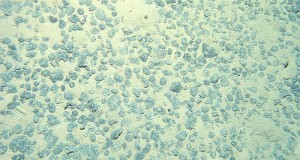
A combination of biological, chemical and geological processes has led to the formation of high concentrations of polymetallic “manganese” nodules on the deep seafloor in the CCZ.
These nodules are potentially valuable sources of copper, nickel, cobalt and manganese, among other metals, which has led to an interest in mining this region. All of the potential polymetallic-nodule exploration contracts that have been granted in the Pacific are in this region, according to the International Seabed Authority.
As part of the ABYSSLINE Project, led by oceanography professor Craig Smith, this study was the first to characterize the abundance and diversity of seafloor-dwelling animals in an exploration claim area leased to UK Seabed Resources Ltd (UK-1) in the eastern portion of the CCZ.
Preliminary data from the surveys showed that more animals live on the seafloor in areas with higher nodule abundance. Further, the majority of the megafaunal diversity also appears to be dependent on the polymetallic nodules themselves, and thus are likely to be negatively affected by mining impacts.
“The biggest surprises of this study were the high diversity, the large numbers of new species and the fact that more than half of the species seen rely on the nodules—the very part of the habitat that will be removed during the mining process,” said Amon.
“In order to more effectively manage the area and mitigate the environmental impacts of deep-sea mining in the CCZ and within the UK-1 contract area, baseline knowledge of the abundance, diversity, and species ranges of megafauna—a key component of this ecosystem—is essential,” said Craig Smith, oceanography professor at UH Mānoa SOEST and ABYSSLINE lead investigator.