Hydrex: Underwater Installation of PBCF’s in Rotterdam

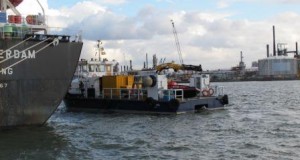
Hydrex installed Propeller Boss Cap Fins (PBCF) on a 183-meter tanker during the vessel’s stop in Rotterdam. As a result of the underwater operation, the ship will not have to wait for the next drydock visit to start benefitting from the fuel savings the PBCF will bring.
The Propeller Boss Cap Fins (PBCF) is a device for propeller efficiency improvement developed by Mitsui O. S. K. Lines, Ltd. The PBCF can recover energy loss of a propeller hub vortex in the propeller’s backward flow. This decreases fuel consumption by 5% when operating at the same speed, or boosts speed by 2% with the same fuel consumption.
The 5% energy saving effect has been verified by world research institutes including International Towing Tank Conferences (ITTC) and by owners.
With the current emphasis on global environment problems, the demand for the PBCF has been continually growing both as an energy saving device and an environment-friendly product because it realizes a 5% reduction in CO2, NOx and SOx emission from vessels.
On-site installation prevents a long wait for fuel saving benefits
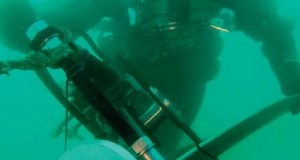
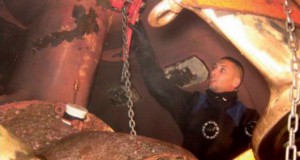
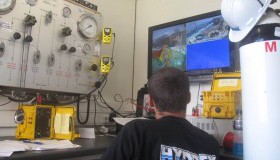
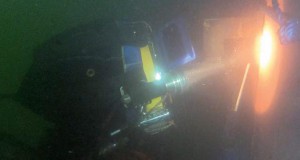
After the Hydrex team arrived at the vessel’s location with one of the company’s workboats, they started the underwater operation with a full inspection of the propeller. Next the diver/technicians removed the propeller cap and cleaned the area where the spinner cone was to be installed. They then lowered the PBCF into the water and positioned it on the propeller. When this was done, grease was inserted in the space underneath the propeller cone for lubrication and the bolts were torqued and secured with wire, finishing the installation of the PBCF. The Hydrex team worked around the clock to finish the operation as quickly as possible.

By performing the operation on-site and underwater, the owner of the tanker could immediately start enjoying the fuel savings the system offers. Otherwise he would have had to wait for the next scheduled drydocking to have the PBCF’s installed. This would have lost him up to two years of fuel savings. Calculations show that he will have earned back the money of the underwater installation in about eight weeks, so the savings for the customer are substantial.