PII Pipeline Solutions Follows ILI Tools Trends
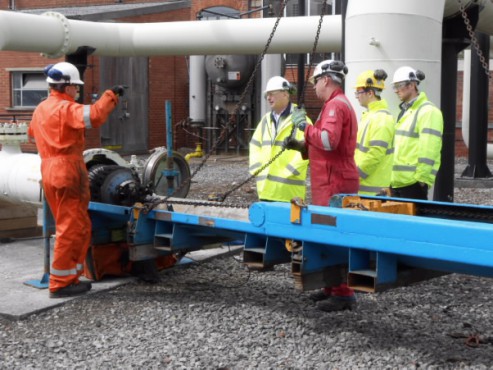
PII Pipeline Solutions has discussed how advances in technology have been harnessed and developed to push the boundaries of what is possible in the realm of pipeline inspection.
Inline inspection technology for oil and gas pipelines has evolved and delivered highly complex and robust tools over the last 20 years. The levels of data accuracy available today would have been unachievable just five years ago. However, the rapid evolution of both technology and deployment techniques have only come about due to a drive for excellence within the industry.
The oil and gas industry’s reliance on its infrastructure and specifically its pipelines has always been a problem that materials scientists, engineers and plant operators have had to address. The importance of being able to identify, manage and repair corrosion, damage or other defects in pipelines while in service was clear by the 1960s and precipitated the development of the first ‘smart pig’.
While comparatively low-tech compared with today’s standards, these first inline inspection (ILI) tools contained a series of instrumented modules that travelled through the pipeline recording corrosion pitting, dents, and other imperfections based either on ultrasonic wall thickness measurements or disturbances in an induced magnetic field.
Made a business imperative by pipeline operators’ need to maximise the safety and integrity of their assets, existing technology within the oil and gas industry was rapidly developed and the first specialist pipeline testing companies came into the market. Utilising existing in-house research and development as the basis for their offering, this new wave of specialist organisations began to draw from the wider science and technology community to ensure that their technology was at the cutting edge of what was possible.
The widespread availability of the microchip in the late 1970s provided the research teams with the opportunity to miniaturise their hardware and improve the capabilities and ease of deployment of a single ILI tool without the overheating issues that plagued valve or transistor-based systems.

PII Pipeline Solutions’ own lineage can be traced back to The British Gas On-Line Inspection Centre which set the tone for the level of investment and commitment required by opening a purpose-built facility in 1979 to support over 200 research staff.
British Gas originally developed tools to allow in-service inspection of its own UK network, but this advanced technology being deployed in onshore pipelines in the UK, soon caught the interest of the oil and gas majors in the North Sea, and thus rapidly spread internationally as a result. A key element of the early success was having a robust science-based understanding of the many factors which affect magnetic performance in order to deliver the highest standard of magnetic flux leakage (MFL) inspection. By combining this knowledge with new techniques in computing, finite element and finite difference modelling, the team at Cramlington offered pipeline operators more information about their assets, with greater accuracy.
While safety has always been the major driver, technology and the capabilities of ILI tools have evolved to address the changing requirements of both pipeline operators and regulators. The heightened recognition of environmental issues has led to a need to identify detecting small diameter pinholes in pipelines. While defects of this size are unlikely to lead to any structural issues, any escape of product into the surrounding environment is not acceptable.
PII Pipeline Solutions’ own fourth generation MagneScanTM and third generation EmatScanTM ILI tools recently reached their fifth anniversary of first deployment and provide an insight into what can be achieved through constant innovation.
Press Release, June 06, 2014