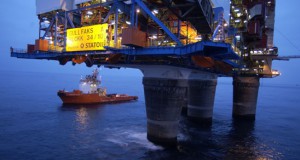
Statoil in Final Trials of Gullfaks Subsea Wet Gas Compressor

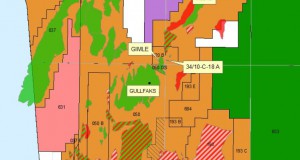
The world’s first subsea wet gas compressor station is now ready for the final testing at Horsøy outside Bergen before being prepared for installation and hook-up to Gullfaks C in 2015.
By adding 22 million extra barrels of oil equivalent from the Gullfaks South Brent reservoir the compressor will help extend the field’s productive life.
Starting back in 2008 the efforts to develop and qualify the compressor in line with Statoil’s requirements represent a good example of Statoil’s cooperation with the Norwegian supply industry to develop robust improved oil recovery solutions.
“The compressor in principle builds on Framo Engineering’s multi-phase pumps, which have been used by Statoil for several decades, including on the Gullfaks field,” says Bjørn Birkeland, project manager for the Gullfaks subsea project.
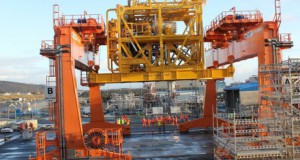
The compressor is developed in cooperation with One Subsea (formerly Framo Engineering), and large parts of the compressor station have been built by suppliers and sub-suppliers in western Norway and in the Bergen region. The delivery from One Subsea consists of a 420-tonne protective structure, a compressor station with two compressors totalling 650 tonnes, and all necessary topsides equipment for power supply and control of the plant.
This type of subsea installation attracts a great deal of interest, and the first period after start-up will be important with a view to gaining operating experience to be drawn on by other fields that may consider using this type of technology.
The compressor station has been mechanically commissioned and test-assembled at Radøygruppen’s yard at Radøy, and is now ready for the final system integration tests implemented by One Subsea at Horsøy. The last test phase will verify that all units of the new subsea compressor station work as expected.
“There is currently a strong focus in the offshore industry on cost-efficient solutions, and it is therefore particularly nice to note that this new technology has been locally developed, qualified and is being implemented by means of local subsea suppliers,” says operations west asset manager Steinar Konradsen.
The possibility of tying in several of the subsea templates connected to Gullfaks C to the compressor station will also be considered. This will further increase the profitability of the project.
Important for subsea factory future
“Together with the technology developed through Åsgard subsea compression the technology in Gullfaks represents important pieces of the jigsaw puzzle of designing the subsea factories of the future,” says Roald Sirevaag, Statoil vice president subsea technology and operations.
“We now have control of the main pieces, so in the future the challenge is to reuse these, putting them together in ways that suit the individual reservoir. Close and good cooperation between operations, project and technology communities will be key to the successful achievement of this,” says Sirevaag.
Why subsea compression?
Compression on the seabed gives a better effect than a conventional topside compressor. In addition, there is an advantage that the platform avoids the increase in weight and space a topside compression module requires. The advantage of a wet gas compression facility is that it does not require any treatment of the wellstream before compression. This makes for smaller modules and a simpler construction on the seabed.
Press Release